Standard Asset Types

Low Income Housing Appraisal

Overview

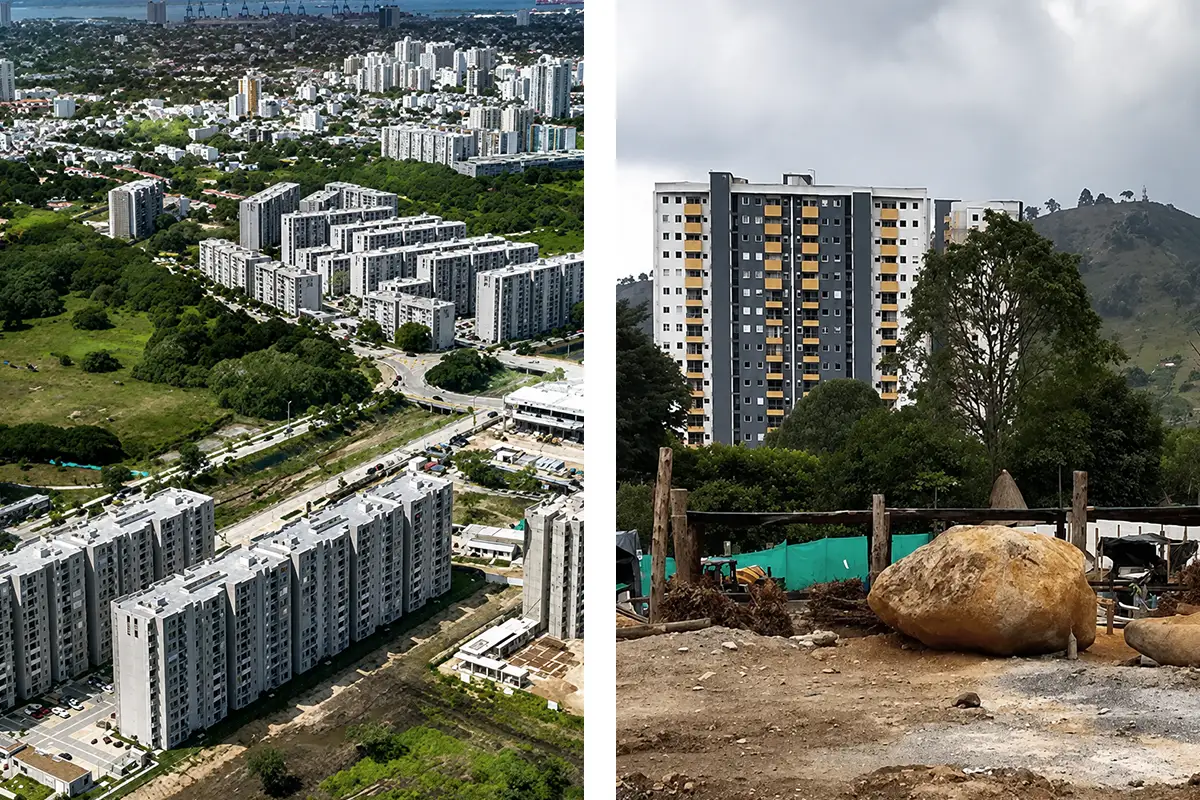
Low Income Housing Appraisal – Low-income housing is an important and growing asset class in Latin America as there is a significant deficit in housing in most countries. Low-income housing is closely tied to government programs or subsidies, which helps stabilize the source of income for the developer.

LOGAN specializes in the appraisal of low-income housing projects and has worked on some of the most important projects in the region. Clients are often fund managers that need to report values on a regular basis to investors and banking authorities.

Types

Categories

  • VIS, Vivienda Interes Social – Colombia
  • VIP, Vivienda Interes Prioritario – Colombia
  • Vivienda Social – Mexico, Peru

Types

  • High-rise – Colombia, Peru
  • Mid-rise – Colombia, Mexico, Peru
  • Attached Home – townhome – Colombia, Mexico

Programs


Approaches, Relevance

Cost – this method of valuation is used sometimes when valuing a project that is in construction. It helps validate the current value of the construction built to date plus land value and profit.

Sales Comp or Market Approach – this method is not used to determine the value of the projects but rather is considered a supporting method to determine the value of the finished unit values – which, are in turn used in the unit sales approach.

Unit Sales Approach – this is considered the most effective method of valuing a low-income housing project, as the projects is self-liquidating. In appraiser terminology, this is effectively a discounted cash flow, but for a sales project (rather than a for-rent project). As mentioned before, the units must be valued first, in order to justify the retail sales value of each model. These values are considered the income in the unit sales approach, and the costs are the costs required to construct.

Income Capitalization – not typically used in this type of valuation because the asset is a self-liquidating asset. This means upon sell-out; the asset will no longer exist.

DCF – Not considered a method used to value a project that is self-liquidating.


Value Impacting Factors

Sales prices – the prices of low-income housing projects are tightly regulated. Usually, they are based on an index associated with the minimum wage of a country. This has a major impact on the value that the project creates.

Sales velocity – this factor greatly impacts the unit sales approach as it moves cash flows earlier in the financial model, which are impacted less by the discount rate. Projects that sell quickly have a higher valuation than those that do not. Some low income or social housing projects in Latin America can sell in one weekend depending on demand and the location of the project.

Price increases – also highly regulated by the government or social housing program, price increases are usually restricted to an index tied to inflation.


Important Inputs

Mortgage parameters – some countries, such as Colombia have government programs that subsidize mortgages for low-income housing purchasers. These mortgages are sometimes guaranteed by the government – or offer below market interest rates.

Delivery timeline – some low-income housing projects are delivered in phases as buildings are constructed (high-rise, mid-rise), or on a block-by-block basis (attached, townhome). The faster the units can be delivered to customers, the quicker the income can be recognized by the project.

Project financing – equity and debt percentages are key in valuing a low-income housing project because the debt often has a lower cost than equity. In this way, projects that are leveraged often have a more volatile value.

Recent Trends

Mortgage subsidy programs – these programs help fortify demand for low-income housing projects and are constantly being funded an approved in each country. There is a political element to such programs and are part of a budget that is approved by government administrations periodically.

Pandemic, and need for additional residential space related to working from home – workers have realized that they need additional living space, especially when asked to work from home.

Investor interest in socially responsible investing – global initiatives are now focused on funneling investment to socially responsible fund managers, who have a socially responsible focus to their investment platforms.

Resiliency of low-income housing investment during and after the pandemic – construction and sales never stopped during the pandemic, and demand has increased thereafter. The resiliency of low-income housing investment has been recognized by investors – and now they view it as a stable option for investment in real estate.


Deliverable

Appraisal Report – Narrative Format

  1. Value considerations
  2. Purpose, scope, limitations of the report
  3. Land, site description
  4. Improvements description
  5. Scope
  6. Highest and best use of subject
  7. Approaches to value utilized, considered
  8. Reconciliation of value
  9. Certification statements

Leadership Team

Leadership Across Latin America's
Principal Markets.

Other case studies

Latam Logistic Properties – Industrial Market Study Colombia, Peru

Project Leaders: Diego Rodríguez Rueda MRICS, Paola Raba Need The client needed to understand and keep track of the dynamics of the logistics.

BASE PG – Office Market Study Colombia

Project Leaders: Diego Rodriguez Rueda, MRICS; Jessica Suarez Needs Market information for use with investors, banks, and for management.

Local teams. Regional standards.
One point of contact.

81st Street # 11-55, Ochenta 81 Building, North Tower, 6th Floor, Office 601, Bogotá, Colombia

Email: adminCO@loganvaluation.com
Phone: +57 (601) 467-4717
Hours: M - F 8.00 am - 5.30 pm

217 Mayor Armando Blondet Street, Office 901, San Isidro, Lima, Peru

Email: adminPE@loganvaluation.com
Phone: +51 (1) 702-7126
Hours: M - F 8.00 am - 5.30 pm

San Rafael de Escazu, District 4 North Coast – Amara CC, Office 408, 10203, Costa Rica

Email: AdminCA@loganvaluation.com
Phone: +506 4010-0565
Hours: M - F 8.00 am - 5.30 pm

Plaza Villa de Madrid No. 1, 10th Floor – Office “C,” Roma Norte, Cuauhtémoc, ZIP Code 06700, Mexico City, Mexico

Email: adminMX@loganvaluation.com
Phone: +52 (55) 9303-5017
Hours: M - F 8.00 am - 5.30 pm

86 Rafael Augusto Sánchez Street, Roble Corporate Center, 7th Floor, Office 10148, Santo Domingo, Dominican Republic

Email: adminCB@loganvaluation.com
Phone: +1 (849) 936-3683
Hours: M - F 9:00 am - 6:30 pm

Av. El Golf 40, 12th Floor, Las Condes, Santiago, 7550107

Email: AdminCH@loganvaluation.com
Phone: +56 (2) 2485-1345
Hours: M - F 8.00 am - 5.30 pm

Calle A-1, Urb. El Parque. Delta Tower, 6th Floor, Office No. 6-E, Barquisimeto, Lara State, Venezuela

Email: AdminVE@loganvaluation.com
Phone: +58 0424-5344823
Hours: M - F 8.00 am - 5.30 pm

Diagonal 6, 10-50, Zone 10, Interamericas Building, North Tower, Office 1601, Guatemala City, Guatemala

Email: adminCA@loganvaluation.com
Phone: +502 2294 4393
Hours: M - F 8.00 am - 5.30 pm